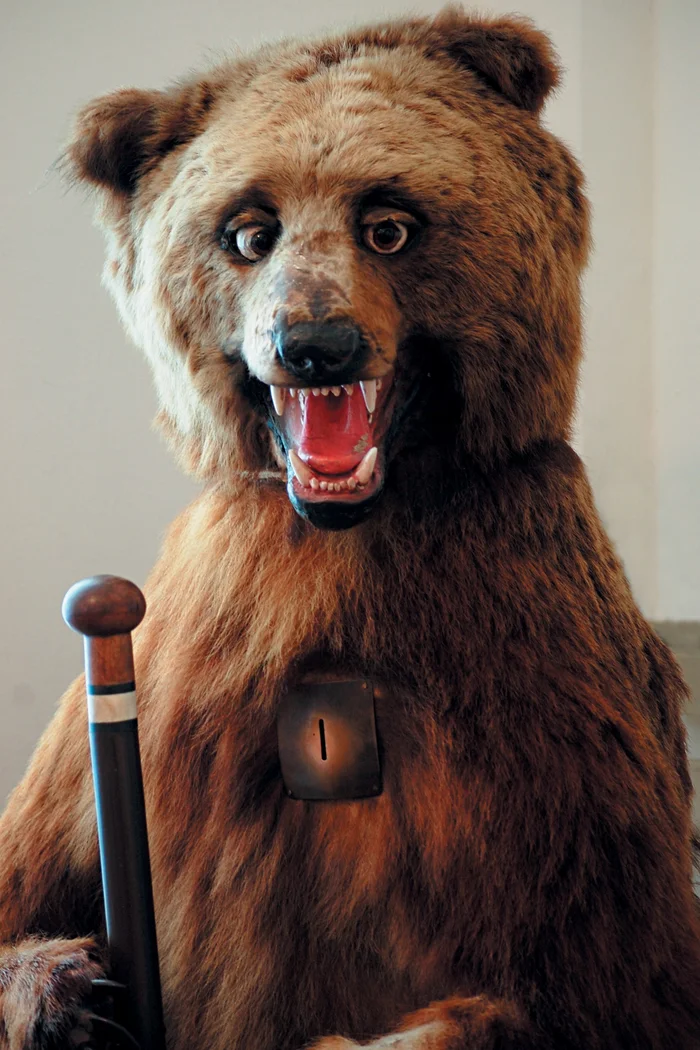
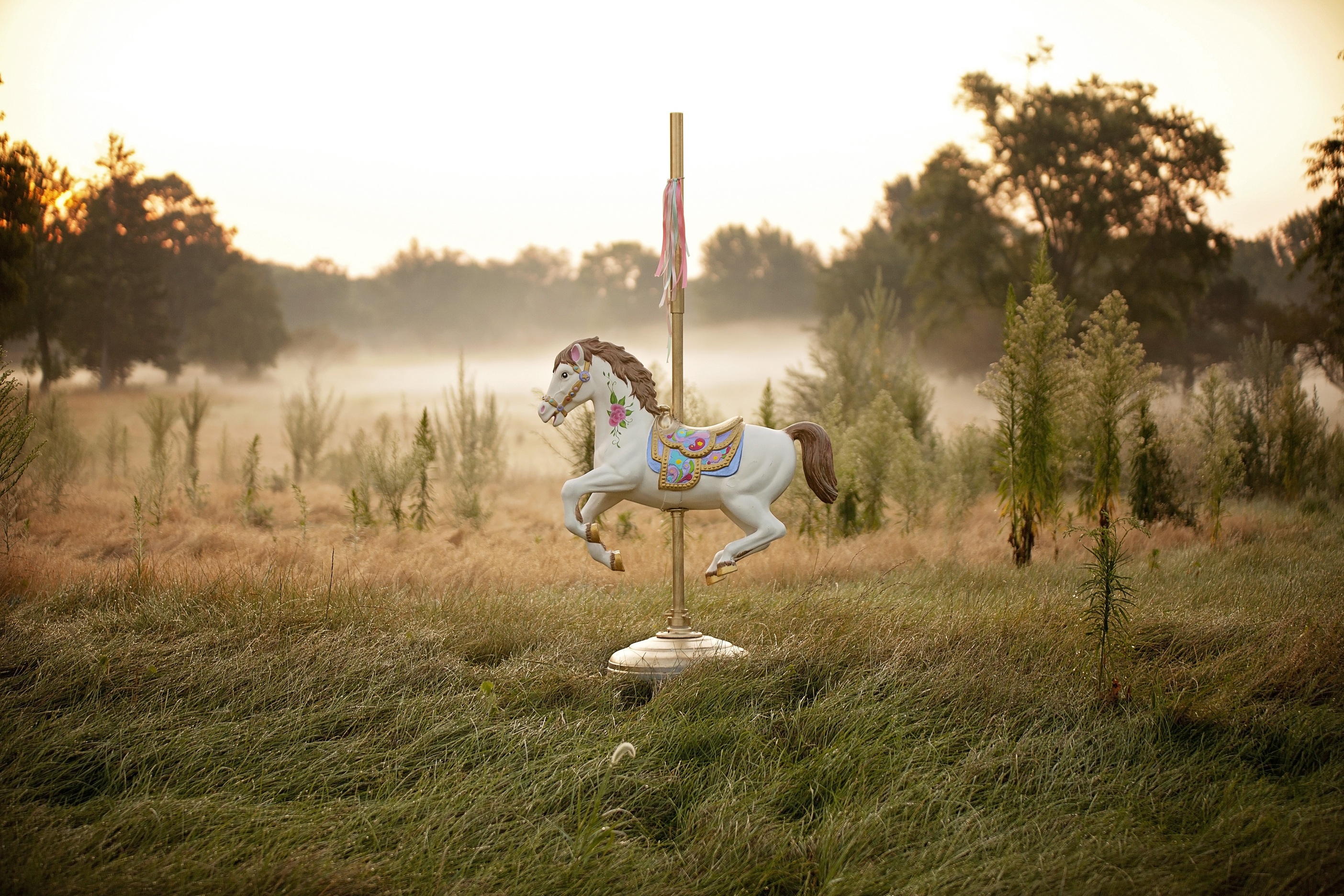
Cats with buttons for eyes. A horse with an uncanny snout.
A sense that things are a little bit off.
Yellow, unblinking, googly eyes fastened to weirdly comical faces.
Frightened fur petrified by the demands of life it cannot meet.
Whiskers broken into strange angular expressions.
The angst of a stuffed paw frozen in midair, never landing, never retreating.
I am developing a morbid fascination with bad taxidermy!
Perhaps the chiefest example of this sub-genre of delight is the Lion of Gripsholm Castle, a strikingly humiliating sermon on the limitations of human imagination.
In 1731, the 13th Ruler of the Ottoman Empire's deylicate in Algiers - Dey Baba Abdi - gifted a lion to King Frederick I of Sweden. It was reportedly one of the first lions the region had ever seen. The lion was cared for, admired, feared, and caged. When it died, the palace commissioned the remains to be taxidermied, hoping to immortalize the consequential gift that may have once stopped the steeliest of Scandinavian hearts with every ponderous footfall. What resulted was the cartoonishly tongue-lolling, flat-toothed, disturbingly disproportionate echo of the once-proud lion - which you can still see today for 170 Swedish krona, behind a glass pane in the Upper Armoury at Gripsholm Castle in Mariefred.
It's easy to laugh and look away. But bad taxidermy adds one serious sin to its litany of outrage: the guilt of ironically exalting "good" taxidermy. You know, the one that's well done. The one that preserves in the zombified echo a modicum of proportionate dignity. The one that softens the wolf with wool. For me, something about taxidermy enlists a gut-wrenching existential despair, and forces questions into the open.
From the outset, I must immediately announce that I have nothing in particular against the art form. It is neither inherently reprehensible nor conceptually displeasing as such. It's just that the accomplishment of taxidermy - the achievement of the fully realized and recomposed body - generates feelings and philosophical curiosities the taxidermist may not anticipate.
In the Book of Genesis, after God summons into being a stunning universe of light and dark, day and night, and after creating animals "soon" after, he finally finds room to fashion the first human being, Adam - possibly his magnum opus, if you like that sort of thing. He gives Adam an assignment: name all the animals. Register them. Open an Excel sheet and make new entries of every crawling critter, every yawning bug, every slithering insouciance, every crashing roar that belts its way across the angles and branches of Eden.
I always imagine that the animals - ontologically older than their newly arrived zealous bureaucrat - didn't take too kindly to the labels and names they now had to wear in order to fit neatly into Eden's regime of legibility. Could that moment have been the first act of taxidermy in mythical history? Not that giving names to things amounts to stuffing dead bodies with formalin and feathers (taxonomy is not taxidermy), but something about taxidermy feels like an act of confining life to memory, to what can be preserved, held, revisited, and possibly arranged as furniture. I read Adam's imperial inquiry as the taxidermic cooling of the hidden, the warm, and the mysterious into the gentrification of the fully known: the violent "this-is" that attempts to shut down speculation.
Interestingly, Adam could not reach the creatures of the ocean, the fugitive wonders of watery shallows and depths. He could not tame the glass sponges, the barreleye fish, brittle stars, and the hauntingly named pfiesteria piscicida. We did that later. Much later. But Adam couldn't do it. Which is one of the reasons I think of water as subjunctive, the "what-if" that upsets the declarative, shore-like pronouncements of "this-is". Water and high humidity are very harmful to finished taxidermy.
At a time when our bodies are braced in the highly regulatory arrangements and disciplines of modern institutions, the taxidermic operations of whiteness, the optimizations of the Anthropocene, we need water. I mean that we need to "become water." Nothing unfastens colonial logics like the caustic poetry of water. Nothing disappoints the quest for settlement like the drunken madness of this element of the unsettled. What does becoming water feel like? Becoming water is not saving the world; it is not becoming better versions of ourselves. It is experimenting at the fissures within closure with the exorbitance of cracks.
But there is one more thing to say, something that may disappoint my newly minted anti-taxidermist readers. The temptation here is to suppose that when a body dies, it loses life - and the work of the taxidermist is to awkwardly couple the crumbling bits together again in an unwinnable attempt to preserve a molecule of the vanishing quality. At first blush, taxidermy's sin is the unflattering vocation of macabre mimicry. The zombie isn't alive; it perverts life by existing. But what if life isn't pure at all? What if the zombie, the taxidermied thing, is life speculating with itself? What if taxidermy is materials research into what makes life so exquisitely irreplaceable? What if taxidermy is stand-up comedy, the dark room of death mocking life, touching itself? What if the Lion of Gripsholm Castle is "para-lion", lion-beside-itself, the ship of Theseus wondering about the crime of morphology? Not merely a perversion, but life beside itself?
Today, as the uncanny crawls out of its metaphorical valleys, as we debate what it means that we are quite unable to figure out what's real and what's not real in a perceptual world held in the grip of AI slop and math-dealing machines, there's a righteous temptation to treat the human as the untaxidermied, the untouched, the pure. Maybe that poor, insufferably funny Scandinavian Lion is a reminder that biology does not end at the body's boundary, that death is stranger than we think, and that it is often the case that the most serious invitations to rethink life often proceed from the protruded tongues of awkward, wild-haired prophets.
Bayo Akomolafe
(vaingloriously composed entirely with my fingers - even though I am not quite certain where my thought begins and where my fingers stop)